Articles
FoodTech puts the focus on hygienic design and food safety
arrow_backTo the overview02 October 2026
- 3D Printing Technology
- Work environment and clothing
- Focus on sustainability
- Food Lab
- Trade publications/media
- Professional organizations
- Food Packaging
- Food Processing
- Research institutes
- Hygienic and food safety
- Ingredients and additives
- IT and Data
- Educational institutions
- Water and Energy
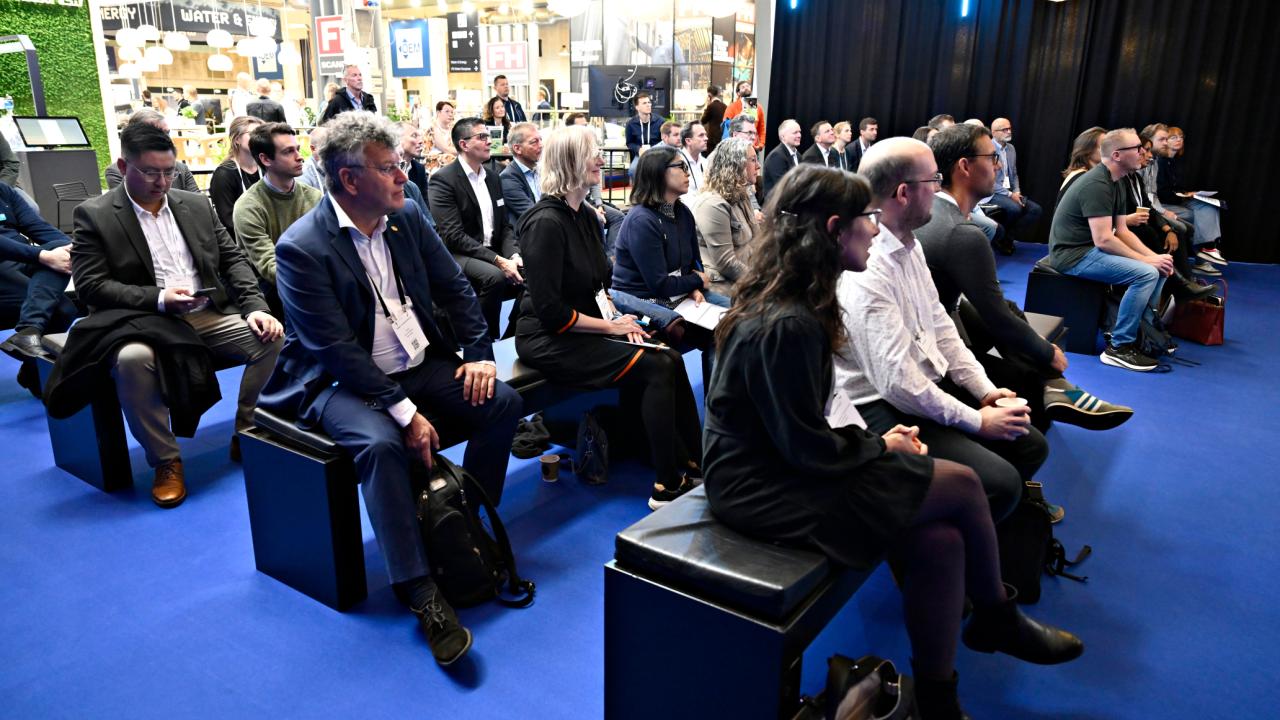
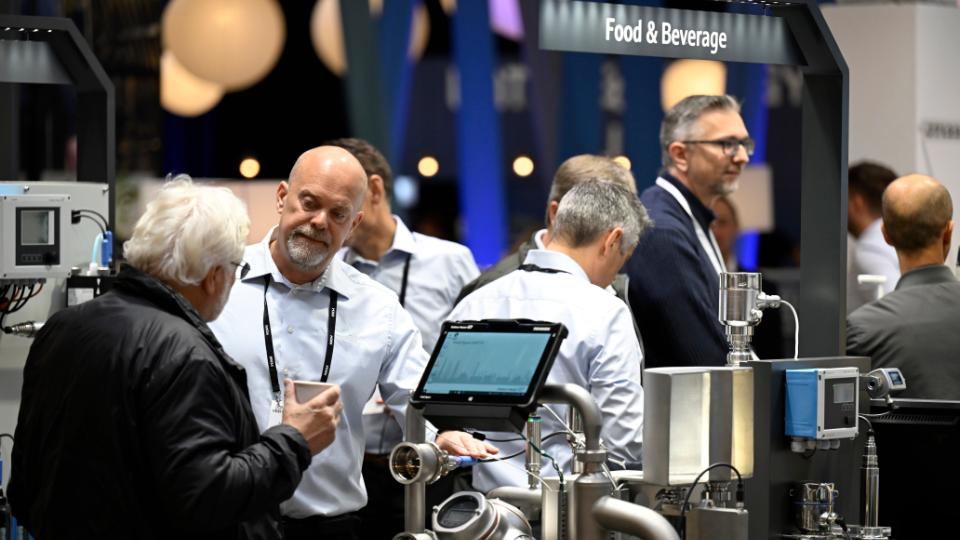
EHEDG (European Hygienic Engineering & Design Group) is participating in this year's edition of FoodTech, which is therefore taking a closer look at how companies ensure that their production equipment is easy to clean and disinfect. FoodTech takes place at MCH Messecenter Herning from 27–29 October.
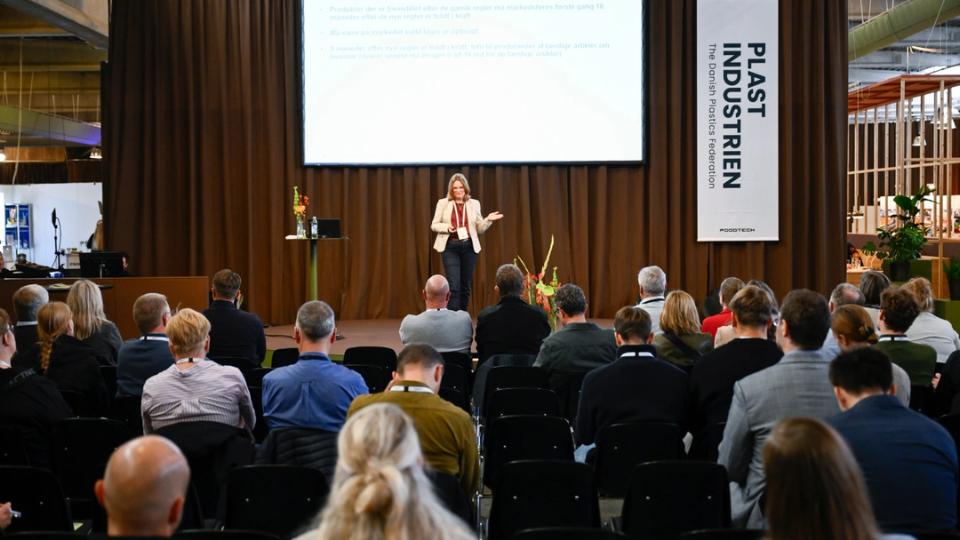
EHEDG offers a stage programme focusing on the themes 'Knowledge and Competence Development', 'Hygienic Risk Assessment and Risk Management' and 'Robotics for the Food Factory of the Future'.
The international association of equipment manufacturers, food companies, research institutions and authorities, EHEDG works to promote food safety through hygienic design. The group has developed more than 50 technical guidelines and offers a globally recognised certification scheme – and at the end of October, EHEDG will participate in FoodTech, where it looks forward to speaking with visitors.
• We want to make hygienic design concrete and accessible. At the stand, visitors can come to us with an issue or a challenge involving, for example, a piece of equipment, and then we can discuss what it looks like and whether there is anything we need to work on further. This will take place in a safe and confidential setting, where we can provide support and highlight where there may be a need for development, explains Alan Friis, Head of the Centre for Hygienic Design at FORCE Technology and Authorised Evaluation Officer at EHEDG, and puts into words some of the benefits of considering hygienic design:
• Food safety and product quality typically go hand in hand. If the equipment is designed so that it is easy and effective to clean, we also increase the likelihood of maintaining product quality. Our approach is first to try to design the risk out, so that it is eliminated. If we cannot do that, we will seek to minimise it. Ultimately, it is about ensuring that healthy and safe food reaches consumers.
Alan Friis gives a concrete example of how the introduction of robots also involves hygiene-related risks.
• When we remove people from a process and introduce a robot, it is easy to think that production automatically becomes more hygienic. But in reality, we remove some risk factors and introduce others. Therefore, we must continue to ask: What can go wrong, how likely is it, and how can we reduce the risk through design? This is achieved through structured risk management.
Usability and reusability
In addition to basic information about hygienic design, EHEDG also works, among other things, with the service life and reusability of production equipment.
• Food safety must be considered throughout the entire service life of production equipment. Today, we must also be able to reuse equipment, and something that has operated on one production line for ten years may suddenly need to be used for something else. Therefore, we must consider both usability and reusability while at the same time ensuring that we can continue to manage food safety, says Alan Friis, who, together with his colleagues, is looking forward both to advising at the stand and to gaining new insights:
• We will not measure success by how many new members we gain, do not misunderstand me, we will be pleased with every new member. What matters to us when we are at a trade fair is sharing knowledge, meeting engaged people and having good professional conversations. And then we also want to become more knowledgeable ourselves. We hope that someone will come to us and ask: 'What about this? Why don't you do it this way?' Because we clearly also expect to gain greater insight into the industry.
Stage programme with three themes
EHEDG, which most recently participated in FoodTech in 2022, offers, in addition to its stand, a professional stage programme that explores a new theme each day. Tuesday focuses on 'Knowledge and Competence Development', Wednesday continues with 'Hygienic Risk Assessment and Risk Management', and Thursday concludes with 'Robotics for the Food Factory of the Future'.
Alan Friis takes the stage on both Tuesday and Thursday, and in addition, visitors can look forward to seeing Per Væggemose Nielsen (Tuesday and Wednesday) and Natacha Holmud (Wednesday), both from EHEDG, as well as Lars Hee Hansen from Capra Robotics (Thursday).
EHEDG is also bringing a learning station where visitors can test their knowledge, obtain a mini diploma and gain insight into the organisation's training programmes.
The fact that EHEDG both invites visitors to bring concrete challenges, shares its expertise on stage and itself looks forward to gaining new knowledge from the industry is welcomed by Line Paugan Riis Jensen, Project Manager at MCH A/S, who says:
• We are very pleased to have EHEDG back at FoodTech. With both the stand and the professional stage programme, they create good opportunities to bring specialised knowledge into play and connect it to the concrete challenges companies are facing. At the same time, EHEDG encourages dialogue and the exchange of experience, where they also want to gain greater insight into the industry themselves. This is precisely the kind of professional knowledge sharing and valuable meetings that we want to create the framework for at FoodTech.
FoodTech takes place at MCH Messecenter Herning from 27–29 October 2026.