Articles
Efficient processing of fish waste and seaweed with the RedUnit system
arrow_backTo the overview27 August 2026 | VOGELSANG
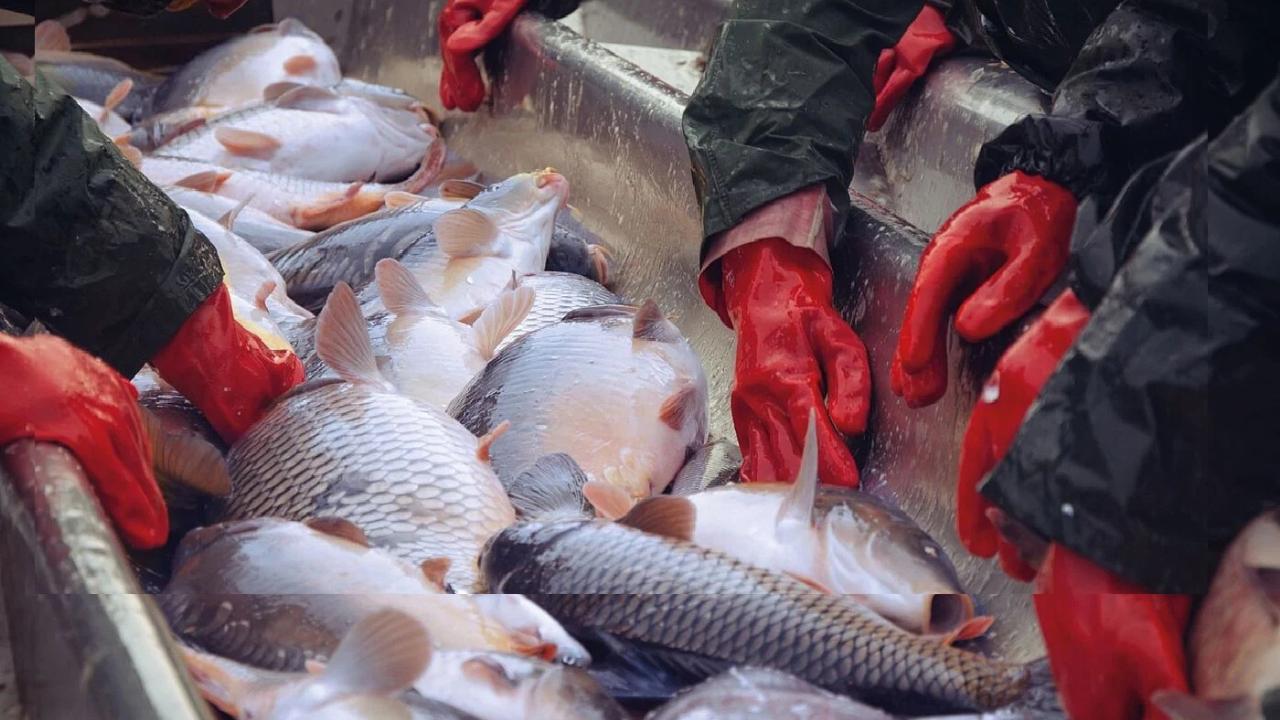
Ireland’s seafood industry generates billions in revenue, yet few people realise that almost half of the catch ends up as waste. On fishing vessels operating off the Irish coast, time is critical. Crews work under pressure to process the catch before its quality deteriorates. As a result, valuable production residues are often discarded overboard or stored in the vessel’s limited cargo space.
But it does not have to be this way.
The real challenge: Wasted space and resources
Global fish consumption continues to increase, partly due to growing awareness of the health benefits associated with omega-3 fatty acids. However, every fish fillet that reaches the chilled counter also leaves behind a head, bones, fins, guts and skin. At Irish fish processing plants and on trawlers, these materials have traditionally been treated as waste.
The figures speak for themselves. On a large fishing vessel that remains at sea for several weeks, unprocessed fish residues occupy a significant amount of storage space. Space is extremely valuable when room on board is limited. Fish processing companies on land face the same challenge: How can large quantities be handled efficiently without occupying unnecessary floor space?
Seaweed processing faces a similar challenge. This is a sector of growing importance in Ireland, with rapidly increasing demand across areas ranging from dietary supplements to industrial uses. However, companies must be able to utilise the entire raw material efficiently instead of discarding parts of it as waste.
This is where the potential becomes clear. Materials considered waste contain valuable resources. Fish oil, fishmeal, protein concentrates, seaweed extracts and bioactive compounds have genuine market value in industries including food production, agriculture, cosmetics and animal feed.
Efficient shredding and pumping with the RedUnit system
The Vogelsang RedUnit system combines shredding and pumping in one compact unit. Solid production residues from fish and seaweed are converted into a pumpable suspension that is easier to store, transport and process further.
This is how the system works:
Step 1: Fish or seaweed residues are fed through a hopper into the twin shaft XRipper shredder. Its monolithic cutting rotors are manufactured from special steel to provide a robust construction. Even tough and resistant materials are reduced to a precise and consistent size.
Step 2: If a finer consistency is required, the RotaCut cutting unit processes the material into a more uniform pulp.
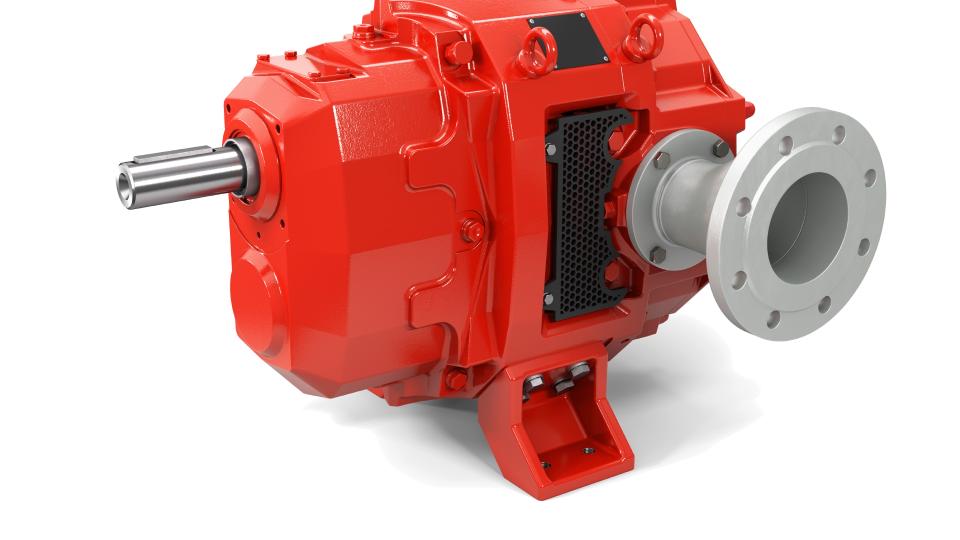
Step 3: The result is a pumpable suspension without large pieces of foreign matter. This reduces the risk of blockages and damage to downstream pumps. An integrated CC series progressive cavity pump then transfers the suspension safely to storage or further processing.
Efficiency is built into the system
The carefully designed RedUnit system does more than convert production residues into a pumpable material. Gravity moves the material between the individual processing stages, reducing the need for pumping and avoiding unnecessary energy consumption.
An automatic level sensor stops the system when no more material is being added. When material is fed into the system again, the process restarts automatically.
Energy is therefore used only when it is needed.
The result is lower energy costs, reduced maintenance and greater operational reliability. Vogelsang has equipped the RedUnit system with intelligent controls suited to modern production environments. All components communicate via the platform-independent OPC UA protocol. This reduces time-consuming installation work and helps prevent compatibility problems.
Connect the system and it is ready for operation. All components and technical data are clearly displayed on a touchscreen. For Irish companies processing fish or seaweed, the system provides a straightforward way to modernise production and monitor performance in real time.
Why the system is relevant to Ireland
Ireland’s fish processing industry makes a significant contribution to both employment and the country’s export earnings. At the same time, seaweed processing is developing into a promising growth sector, with increasing use in nutrition and industry.
Both sectors face the same challenge: Organic material must be handled efficiently while maximising the value of the raw material.
The RedUnit system converts production residues previously treated as waste into a consistent, pumpable material. This reduces space requirements on board vessels and at processing plants, lowers the risk of downtime and creates new revenue opportunities from valuable by-products.
For Irish companies competing in a global market, efficiency and sustainability are no longer simply advantages. They are essential competitive factors.
Global fish consumption is increasing, as is demand for seaweed-based products. Ireland’s fishing fleet and processing companies are well positioned to meet this demand. However, efficient production requires the entire catch to be utilised, not just the fillet.
The RedUnit system makes this possible in practice. Its compact, intelligent and energy efficient design has been developed specifically for this challenge.


This article is written by:
VOGELSANG
Vogelsang – Leading in Technology
Vogelsang is a German engineering company with 25 subsidiaries and a global network of distributors. We develop and supply technology solutions for demanding processes in agriculture, biogas, industry, wastewater and transport.
Our product portfolio includes pumps, industrial shredders, macerators, separators, and spreading and distribution systems. Whether the task is pumping viscous media, handling solids or ensuring even distribution, the goal is the same: reliable operation, high capacity and low operating costs.
Vogelsang solutions are developed
Meet us at FoodTech


Responsibility for content on this site
Information, images, product descriptions, videos, certifications, sustainability claims, and other content on company profiles are uploaded and maintained by the individual exhibitors.
Exhibitors are solely responsible for ensuring that their content is accurate, properly documented, and legally compliant, including compliance with applicable regulations concerning marketing, sustainability claims, and intellectual property rights.
MCH A/S solely provides the platform and does not, as a general rule, verify the content.