Articles
MTP vs. S88: Is the food industry about to learn a new concept?
arrow_backTo the overview16 October 2026 | EngineerIT
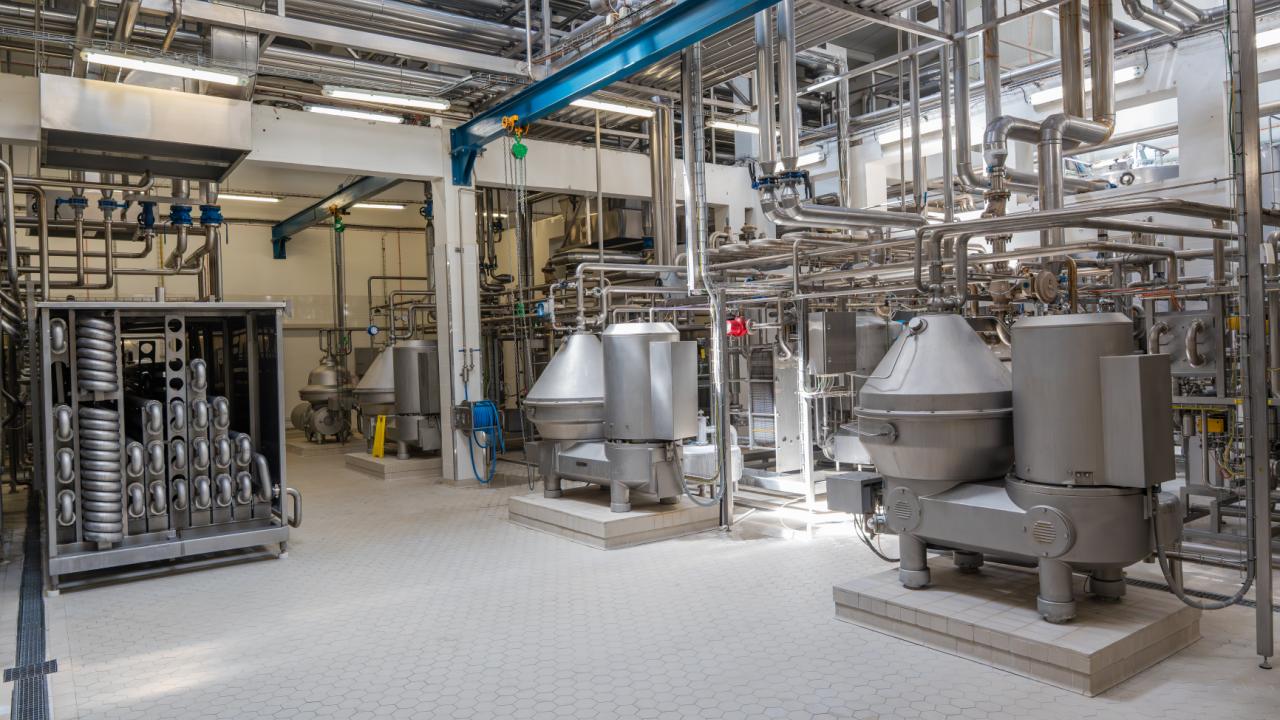
The open standard MTP 2.0 (Module Type Package) is set to play a central role in how we structure process automation in food processing plants. What does this mean for machine owners and machine builders? We offer our perspective, based on a year of working with MTP.
For decades, the ISA 88 standard (or simply S88) has been a cornerstone in how we build the structure and software for food processing plants. However, in the coming years, we will increasingly see the open standard MTP 2.0 (Module Type Package) also shaping how we structure process automation.
At EngineerIT, we have taken a deep dive into working with MTP to better understand the capabilities of MTP tools. Here is our take on what this standard will mean for machine owners and machine builders in the food industry over the coming years.
Will MTP replace S88?
No; the two standards will complement each other. While S88 describes how to structure and control a production process, MTP describes how an independent process module can be integrated with—and controlled by—a higher-level system.
Much like S88, the purpose of MTP is to ensure more consistent solutions through a standardized structure and modularity. However, the MTP standard opens up new possibilities for exchanging files between different development tools, auto-generating program code, and structuring testing and validation activities.
In short, S88 can continue to be used to structure the production process, while MTP makes it easier to assemble and modify the plant equipment required to carry out that production.
Why automate process plants using MTP?
With MTP, you build your process plant using modules that speak the same language. This makes it easier, for instance, to integrate equipment from different brands and generations. Furthermore, by simply requiring that new machinery be "MTP 2.0 compliant," you can delegate a portion of the programming workload to the supplier.
You can test and validate each individual module as you go, avoiding a massive surge in workload toward the end of the project. Additionally, the modules can be reused and rearranged—even when you need to make changes later on.
The standardized MTP structure also enables the auto-generation of a significant portion of the standard code, resulting in substantial time savings. In a recent project, we generated approximately 70% of the software and 90% of the HMI in just three hours—a task that would have taken up to two days to code from scratch.
With MTP 2.0, you benefit from:
• Easier modifications: Changes are implemented using modules that have already been validated.
• Fewer errors: A proven, thoroughly tested foundation is reused, eliminating the need to build it from scratch every time.
• Consistent quality: Modules look and behave the same way, regardless of who created them.
• Continuous documentation: Documentation is generated alongside development, rather than having to be written after the fact.
• Uniform test protocols: Protocols are constructed based on the same source. The first step toward MTP for machine owners
The first step is to have someone with expertise in MTP and automation examine your facility to determine whether MTP actually makes sense for you. It might be a perfect fit—or it might not be worth the investment at all.
Alternatively, stop by our stand, L 9176, at Food Tech 2026 for a no-obligation chat with our MTP specialists about the opportunities and challenges specific to your facility.
Should OEMs make their equipment MTP 2.0 compliant?
The benefits of MTP for the end user are so significant that it is likely only a matter of time before MTP 2.0 compliance becomes a standard requirement for you as a machine supplier.
We recommend that you start exploring how to prepare for this now; during the initial years of implementation, compliance could serve as a substantial competitive advantage. Another added benefit is that the MTP standard is an open standard available to everyone. Furthermore, because the requirements are clearly defined, the entire process of managing interfaces becomes easier, allowing you to follow the same procedure every time.
The first step toward MTP for machine builders
The good news is that compliance can be achieved relatively easily using a gateway, meaning you do not have to overhaul everything at once.
Our MTP specialists know exactly which tools to introduce—and when—to ensure the transition is as smooth as possible. They can complement your own in-house expertise throughout the entire process.
Visit our stand, L 9176, at Food Tech 2026 to learn more about how you can prepare for requirements regarding MTP 2.0 compliance.

This article is written by:
EngineerIT
EngineerIT is an automation engineering company specialising in PLC and HMI programming and technical project management.
We help automate production lines for OEMs and manufacturers in highly regulated industries such as pharma, medtech, biotech, and the food and beverage industry.
We specialize in:
• Automation engineering in regulated industries
• Technical project management
• Programming of PLCs, HMIs, servo systems and industrial robots
• Modernising and retrofitting control systems
• Standardising PLC and HMI software
Meet us at FoodTech





Responsibility for content on this site
Information, images, product descriptions, videos, certifications, sustainability claims, and other content on company profiles are uploaded and maintained by the individual exhibitors.
Exhibitors are solely responsible for ensuring that their content is accurate, properly documented, and legally compliant, including compliance with applicable regulations concerning marketing, sustainability claims, and intellectual property rights.
MCH A/S solely provides the platform and does not, as a general rule, verify the content.